What Changes From One Brewing Method to Another
Every cup of coffee comes down to the same basic transaction: hot water pulling flavor compounds out of ground coffee. What changes is how fast that happens, whether pressure is involved, and what kind of filter – if any – stands between you and the final cup. Those variables shape everything from body and clarity to bitterness and sweetness.
Drip Coffee
Hot water drips through a basket of grounds and passes through a paper filter into a carafe below. Gravity does the work. The paper catches most of the oils and fine particles, so the result is clean, bright, and easy to drink. A standard 10-cup batch takes about 8–10 minutes. Drip suits people who want consistent, low-effort coffee in quantity. It's the default for a reason.
Pour Over
Same principle as drip – paper filter, gravity, percolation – but you control the water flow manually. Pouring slowly in small circles gives you more even extraction, which tends to produce a noticeably cleaner, more nuanced cup. The tradeoff is attention and time. A single pour over takes 3–4 minutes of active involvement. Worth it if flavor is the priority.
French Press
Here, grounds sit fully submerged in hot water for about 4 minutes before a metal mesh plunger is pressed down. No paper filter means the oils stay in the cup. The result is heavier, richer, and slightly grainier than drip. Some people love that texture. Others find it muddy. It suits anyone who prefers a fuller, rounder cup without much fuss.
AeroPress
Grounds steep briefly, then you press water through them manually using air pressure. Fast – under two minutes – and surprisingly forgiving. The cup is smooth, low in bitterness, and sits somewhere between drip and espresso in concentration. Ideal for travel or experimentation.
Espresso
Espresso is made by pushing hot water under high pressure through a compact bed of finely ground coffee, usually in about 25–30 seconds. This fast, pressurised process creates a short, full-bodied drink with a dense texture and a golden layer of crema on the surface. Its concentrated flavour does not simply come from using stronger coffee. Espresso relies on a distinct brewing technique that extracts the grounds differently from drip or filter methods, giving it its characteristic intensity and depth.
No single method wins. Each one trades something – speed for control, clarity for body, simplicity for precision. What you value in a cup determines where you land.
Why Café Espresso Tastes Different From Home Coffee
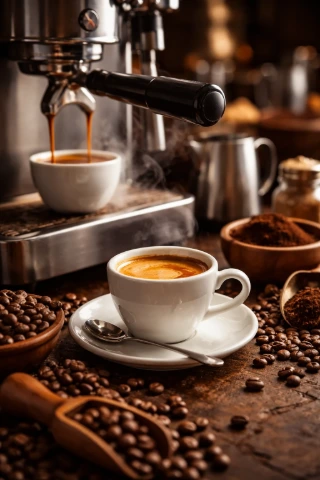
Order an espresso at a good café and then try to replicate it at home – most people can't get close. That gap isn't about beans alone. Café espresso tastes different because the brewing method, grind precision, pressure, freshness, and consistency are all operating at a level most home setups simply don't match.
Espresso Is a Concentrated Method
Espresso relies on pressure as much as heat. A machine sends hot water through a tightly packed layer of finely ground coffee at about 9 bars, producing a concentrated shot of around 30ml in less than half a minute. The surface is typically capped with crema, the reddish-brown foam created as gases trapped in fresh coffee are released during extraction. Other methods can produce similarly bold coffee, but not in quite the same way. Moka pots use much less pressure, while drip brewers depend mainly on gravity, so each method develops a noticeably different flavour and texture.
Grind Size and Precision Matter
Extraction is how much flavor water pulls from the coffee grounds. Grind too coarse and water rushes through, pulling weak, sour flavor. Too fine and it chokes, pulling bitter, astringent compounds. Espresso needs a very fine, consistent grind – and consistency is where cheap grinders fail. Blade grinders produce uneven particle sizes, which means some grounds over-extract while others under-extract. A decent burr grinder fixes that.
Fresh Beans Change Everything
Beans start losing CO₂ within days of roasting. Supermarket coffee sitting in a bag for months produces flat, lifeless espresso. Cafés typically use beans roasted within the last two to four weeks and store them properly. That freshness shows up immediately in flavor and crema quality.
Equipment and Workflow Make a Big Difference
Professional machines hold water temperature within half a degree. Home machines fluctuate. Baristas also pull dozens of shots a day, adjusting grind and dose based on how each shot flows. That daily calibration – dialing in – is something most home brewers skip entirely. The beans aren't usually the problem. The grinder, temperature stability, and repetition are.
Milk Drinks Explained Without the Coffee-Shop Jargon
Most café menus look complicated, but the drinks on them aren't. Nearly everything is built from the same three things: espresso, steamed milk, and foam. What changes is the ratio. Get your head around that, and the whole menu starts making sense.
Espresso
About 30ml of concentrated coffee, pulled in roughly 25–30 seconds. No milk, no water added. The taste is intense, slightly bitter, and often has a thin layer of reddish-brown foam on top called crema. It's the base for almost every drink on this list.
Macchiato
An espresso with a small spoonful of foam or a splash of steamed milk on top. The name means "stained" in Italian. You're not softening the espresso much here – just taking the sharpest edge off it. Still very coffee-forward.
Cortado
Equal parts espresso and steamed milk, usually served in a small glass around 120ml. The milk cuts the intensity without making things creamy. There's no real foam layer. Good middle ground if straight espresso feels too punchy but you don't want something milky.
Cappuccino
Roughly one-third espresso, one-third steamed milk, one-third thick foam. Served in a 150–180ml cup. The foam here is substantial and dry, which gives the drink a lighter, airier feel than a flat white or latte.
Flat White
Similar ingredients to a cappuccino but smaller – usually 150–160ml – with less foam and more steamed milk. The result is silkier and more coffee-tasting than a latte. Originated in Australia and New Zealand, though cafés everywhere have their own version now.
Latte
The mildest of the espresso-plus-milk drinks. A standard latte runs 240–300ml, with a single or double espresso diluted by a large volume of steamed milk and just a thin layer of foam. Smooth, gentle, easy to drink.
Mocha
A latte with chocolate syrup or powder added. Usually topped with whipped cream. It's genuinely sweet and works well for people who find coffee bitter on its own.
From strongest to mildest tasting:
Espresso – Macchiato – Cortado – Flat White – Cappuccino – Latte – Mocha
How to Make Better Coffee Without Expensive Gear
Most of the difference between a great cup and a forgettable one comes down to a few small habits. No grinder upgrade required. Here's what actually moves the needle.
Buy Better Beans
Freshness matters more than brand. Coffee starts losing flavor within weeks of roasting, so a bag sitting on a supermarket shelf for three months isn't doing you any favors. Look for a roast date on the bag, not just a best-before date. Whole beans from a local roaster or a reputable online supplier, roasted within the last four to six weeks, will taste noticeably brighter and more complex than anything pre-ground from a generic tin.
Grind More Consistently
Pre-ground coffee is convenient, but the grind size is fixed, and it's usually wrong for your method. A cheap blade grinder chops beans unevenly, which means some particles over-extract while others under-extract. The result is bitter and flat at the same time. A basic burr grinder, even an entry-level hand grinder around $30–$40, produces a far more uniform grind and makes a real difference in flavor.
Fix Your Coffee-to-Water Ratio
Too much coffee makes a brew taste harsh and muddy. Too little and it's watery and sour. A reliable starting point is 1:15 by weight, so 20 grams of coffee to 300 grams of water. A simple kitchen scale takes the guesswork out entirely and costs less than a bag of specialty beans.
Pay Attention to Water and Temperature
Boiling water scorches lighter roasts and turns them bitter. Let the kettle sit for 30 seconds after boiling, or aim for around 90–96°C. Tap water with heavy chlorine or mineral content also affects flavor, so filtered water is worth trying if your coffee tastes consistently flat.
Clean Your Gear More Often Than You Think
Old coffee oils go rancid. A brewer that hasn't been properly cleaned in weeks adds a stale, greasy bitterness to every cup. Rinse your equipment after each use and give it a proper wash with mild soap every few days.
The highest-impact changes, in order: fresher beans, a consistent grind, and a measured ratio. Technique beats equipment almost every time.
How to Choose the Right Coffee Brewing Method for Your Routine
Knowing how different brewing methods work is useful, but the best method is still the one that fits naturally into your day. Time, serving size, preferred flavor, and how much attention you want to give the process all matter. A technically impressive setup is not much use if making coffee starts feeling like a chore.
A few simple comparisons can make the choice easier:
- Choose drip coffee for convenience and volume. It works well for households, offices, or anyone who wants several cups ready at once. Once the machine is loaded, there is very little else to do.
- Choose pour over for clarity and control. This method suits people who enjoy noticing differences between beans and do not mind spending a few minutes controlling the pour. Lighter roasts often show their character particularly well this way.
- Choose French press for body and simplicity. The metal filter allows more oils and fine particles into the cup, creating a heavier texture. It is also easy to prepare without specialised equipment.
- Choose AeroPress for speed and flexibility. It works especially well for one person, takes little time to clean, and allows plenty of experimentation with grind size, water temperature, and brewing time.
- Choose espresso for concentration and milk drinks. Espresso makes sense if cappuccinos, flat whites, lattes, and short concentrated coffees are what you drink most often. The tradeoff is greater attention to grinding, dosing, and machine maintenance.
Better Coffee Starts With a Few Smart Choices
Brew methods are not a ladder where espresso sits at the top and drip coffee waits at the bottom. Each one produces a genuinely different experience – a slow pour over and a well-pulled espresso are not competing versions of the same thing, any more than a grilled steak and a braise are. Café espresso tastes the way it does because the process is fundamentally different: high pressure, finely ground coffee, and a very short extraction time produce something concentrated and layered that a home drip machine simply cannot replicate – not because home equipment is inferior, but because it works on entirely different principles. Milk drinks mostly come down to proportion and texture. A flat white feels richer than a latte because there is less milk, not because anything more complicated is happening. Get the texture close to smooth and silky and the ratio roughly right, and you are most of the way there. None of this requires a thousand-dollar machine. Fresher beans, a consistent method, and a clearer sense of what you actually enjoy will do far more than expensive gear ever could.